
The body remembers more than we think

When people talk about childhood trauma, it’s usually framed as something psychological, perhaps a painful memory, a difficult past, or something someone eventually “moves on” from.
But science is increasingly showing us that trauma isn’t just something we remember.
Sometimes, it’s something our bodies remember too.
Researchers describe this as biological embedding, the idea that early experiences can leave physical traces on the systems that regulate our bodies. Childhood adversity can influence how our brain develops, how our immune system behaves, and even how our cells react to stress.
In other words, trauma doesn’t simply disappear with time. It can shape how the body learns to respond to the world.
Understanding this changes the way we talk about trauma. Instead of viewing it as a personal failing or something someone should simply “get over,” we can begin to see it as a real physiological process.
And that shift matters.
Because when trauma is understood as something that affects the body, not just the mind, healing stops being about willpower and starts being about care, support, and science.
The goal of this post is simple: to take some of the complicated research around trauma and biology and make it easier to understand.
I should also mention where this curiosity started. I recently did a small project at the University of British Columbia in a seminar called Stress and Trauma, and it genuinely shifted the way I think about trauma and stress altogether. Writing this post is my attempt to translate some of those ideas into something more accessible.
A quick way to understand epigenetics
To understand how trauma can shape the body, we have to zoom in really small, all the way down to our cells.
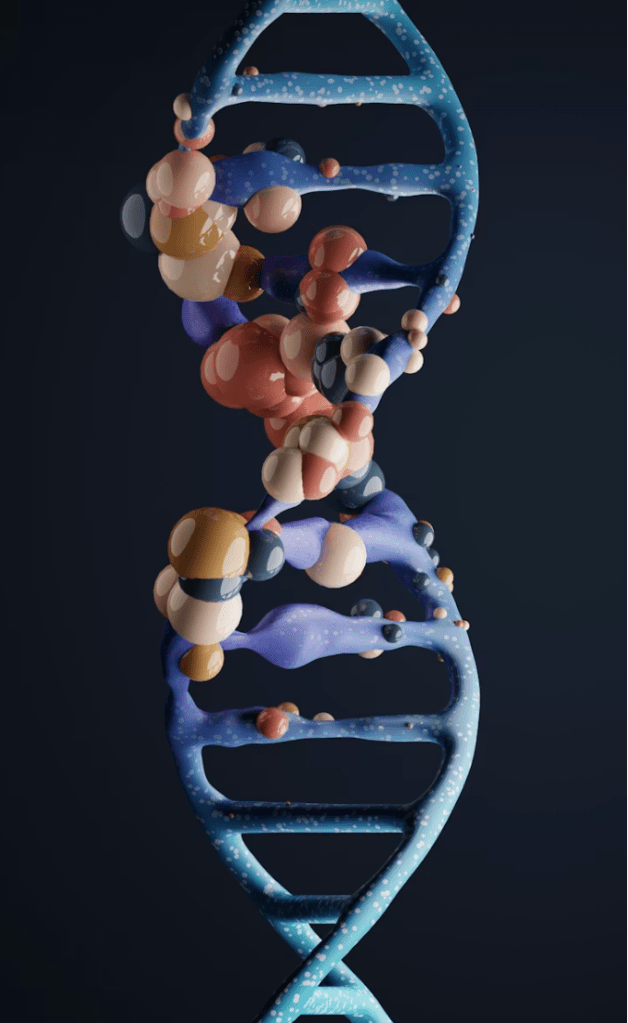
One of the key ideas here is epigenetics, which looks at how life experiences can influence how our genes behave.
A helpful way to picture this is with a simple analogy.
Imagine your DNA as a massive instruction book.
- Your genome is the whole book, every instruction your body has.
- Genes are the chapters. Each one contains instructions for things like growth, immunity, and stress responses.
- Epigenetic tags are like little sticky notes placed throughout the pages.
These sticky notes don’t change the words themselves. Instead, they tell your body which instructions to pay attention to, and which ones to skip.
Another way to think of it is like SparkNotes for your cells. The body highlights certain instructions depending on what kind of environment it thinks it’s living in.
If the environment feels safe, the body prioritizes one set of biological responses.
If it feels dangerous, a different set gets emphasized.
One gene scientists often study is called the Deletion of Liver Cancel 1 or DLC1, which plays a role in normal cellular regulation and stress responses.
Trauma can affect this gene through something called DNA methylation. Think of methylation like a dimmer switch, it can turn the activity of a gene up or down.
When stress-related genes are altered this way, the body may stay on high alert even when the danger is gone.
What began as a survival response can slowly turn into a long-term pattern of vigilance.
And when these changes happen during childhood, when the brain and body are still developing, they can become deeply ingrained in the system.
The myth of “one type of PTSD”
For many years, mental health research treated Post-Traumatic Stress Disorder (PTSD) as one single condition.
But newer research suggests something important: trauma that happens in childhood may actually affect the body very differently than trauma that happens later in life.
A well-known study by Divya Mehta and colleagues found striking biological differences between people who experienced trauma early in life and those who experienced trauma as adults.
Their findings were surprising.
The genetic activity patterns of people with childhood-related PTSD and adult-onset PTSD were about 98% different. In other words, the biological signatures barely overlapped.
Researchers also found that people who experienced childhood abuse showed far more epigenetic changes, sometimes up to twelve times more, than those who experienced trauma only as adults.
This suggests that timing matters a lot.
When trauma occurs during childhood, it interacts with systems that are still developing the brain, the stress response system, and even the immune system.
So if the underlying biology is different, it raises an important question:
Should the treatment approaches also be different?
Many researchers now believe the answer is yes.
The Bridge: Where research meets real life
Scientific studies can explain what’s happening biologically, but they don’t always capture what trauma actually feels like to live with.
That’s why memoirs like What my Bones Know resonate so deeply.
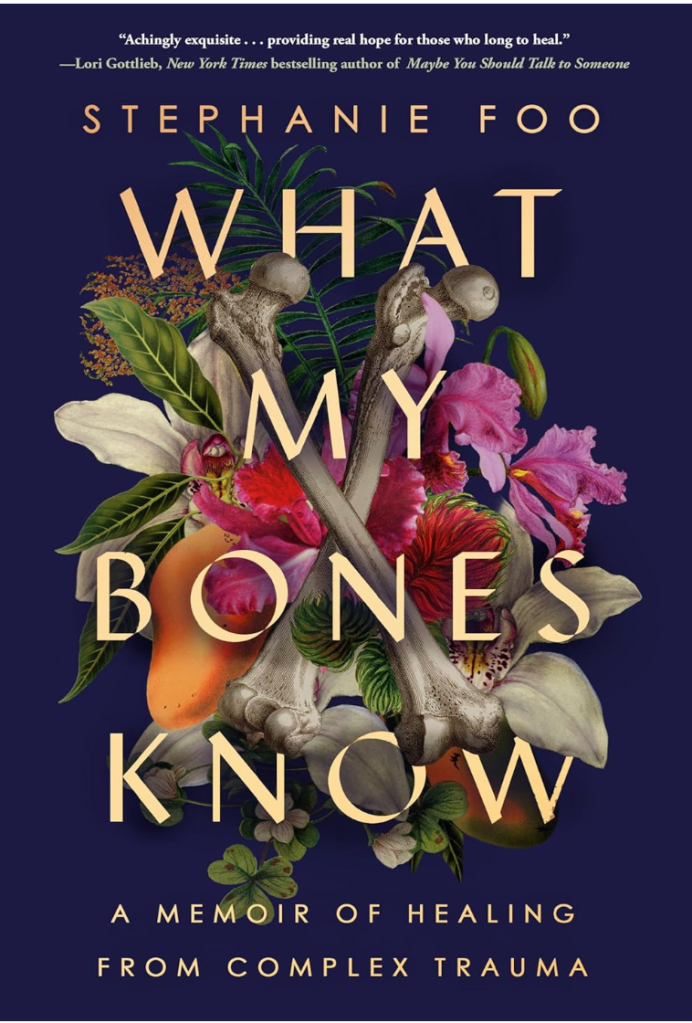
In the book, author Stephanie Foo describes growing up with complex trauma and later trying to understand the science behind her experiences.
Her story shows how the biological and emotional sides of trauma often intersect.
Researchers study genes like FKBP5, which help regulate the body’s stress response. But in Foo’s life, those patterns also connect to family history, including trauma her grandfather experienced during the Malayan Emergency.
Scientists are still studying how trauma can echo across generations, but there is growing evidence that severe stress can influence biological systems that get passed down within families.
For survivors, these biological patterns can show up in very physical ways, chronic stress, inflammation, sleep disruption, hair loss, or sudden weight changes.
Emotionally, it can feel like a constant background signal that something isn’t safe.
Foo calls this feeling “The Dread.”
It’s not always loud or dramatic. Sometimes it’s just a quiet but persistent sense that something is about to go wrong.
There’s One Thing to Take Away From This
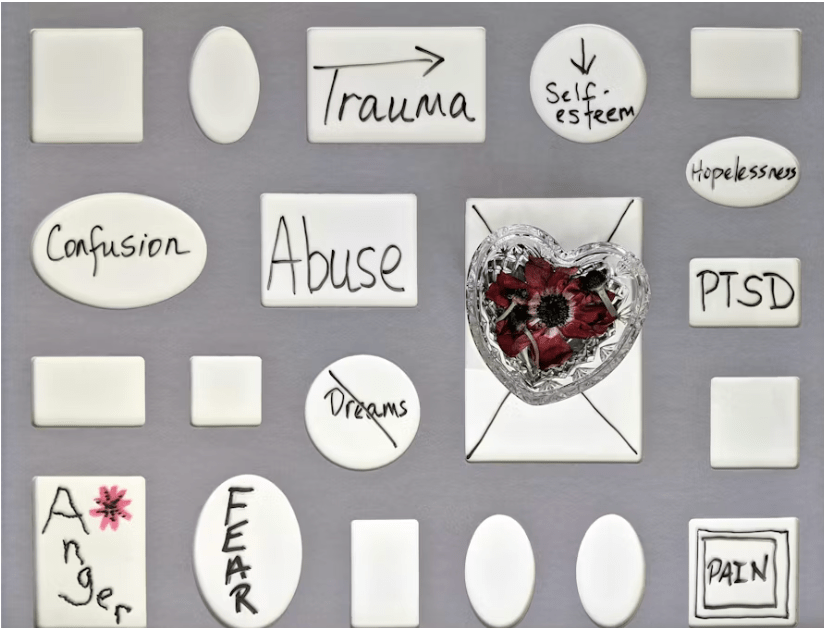
If there’s one thing I hope stays with you after reading this, it’s this: trauma is not just something people remember, it’s something the body learns.
Research in epigenetics shows that difficult experiences, especially in childhood, can shape how our stress systems develop and how our bodies respond to the world. These changes don’t mean someone is broken. They mean the body adapted to survive the environment it was in.
Understanding this matters because it shifts how we talk about trauma. Instead of asking “Why can’t someone just move on?”, we start asking “What happened to their nervous system, and how can we support it?”
A few key ideas stand out from the research:
- Experiences can shape biology. Trauma can influence how genes related to stress and regulation are expressed.
- Childhood trauma can affect the body differently than trauma in adulthood. When adversity happens during development, it can shape systems that are still forming.
- Many trauma responses are survival adaptations. Hypervigilance, emotional sensitivity, and independence often developed as ways to stay safe.
- Understanding the biology of trauma can reduce stigma. When we recognize that trauma affects the body, compassion becomes a much more natural response.
The science doesn’t just explain suffering, it helps us see the incredible ways the body tries to protect itself.
The strengths that came from survival
Something that often gets overlooked is that many traits developed during trauma were originally adaptations for survival.
Hyper-independence.
Emotional sensitivity.
Extreme competence.
Constant awareness of other people’s moods.
These weren’t random personality quirks, they were ways of navigating difficult environments.
Sometimes those traits can make adult relationships complicated. But they can also become strengths once someone begins to feel safe.
In many ways, they’re reminders of how resilient the human system can be.
Practical Takeaways: Caring for a Nervous System That Learned to Survive.
If there’s one practical idea to hold onto, let it be this: your nervous system is trying to protect you, not sabotage you.
Sometimes our bodies react strongly to situations that others might see as small or neutral. That reaction isn’t weakness — it’s often an old survival system doing exactly what it was trained to do.
Two small practices can help make sense of these moments:
1. Notice when the past might be echoing into the present.
Strong emotional reactions sometimes come from earlier survival patterns rather than the current situation. Simply recognizing that possibility can create a small moment of pause.
2. Safety can be practiced in small ways.
Things like slowing your breathing, stepping away from an overwhelming moment, or grounding yourself in your surroundings can gently signal safety to the nervous system over time.
Healing rarely happens all at once. More often, it happens through many small moments where the body slowly learns that the present is different from the past.
A small note before we finish
Reading about trauma can sometimes bring up emotions or memories unexpectedly.
If that happens while you’re reading this, it’s okay to pause.
You might take a few deep breaths, step away for a moment, or do something grounding, like drinking water or stretching.
You’re allowed to take in information at your own pace.
Understanding the biology of trauma doesn’t mean anyone is broken.
If anything, it shows just how adaptable the body is.
And the more we learn about how trauma affects the body, the better we can support healing, not through blame or stigma, but through understanding. 💛
 In the Quiet Between
Leave a comment